
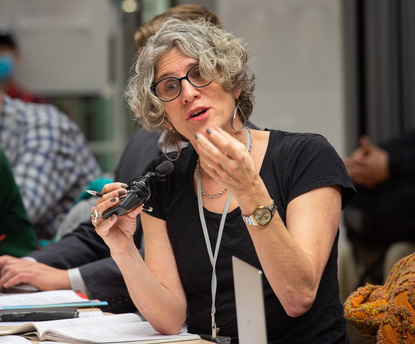
 Dr. Alexandra Juhasz is Distinguished Professor of Film at Brooklyn College, CUNY. She is a core faculty member in the Interactive Technology and Pedagogy Certificate Program at the CUNY Graduate Center.
She has a Ph.D. in Cinema Studies from NYU (1991) and attended the Whitney Independent Studio program as a videomaker (1988).
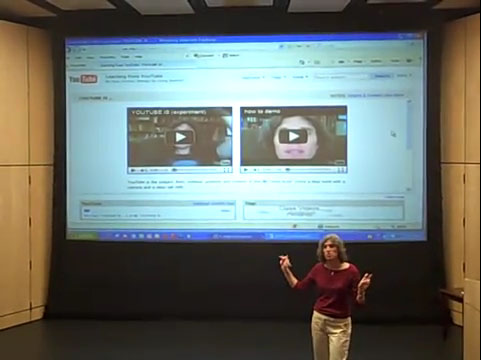
Dr. Juhasz has taught at NYU, Swarthmore and Bryn Mawr Colleges, Claremont Graduate University, USC, Pitzer College, and Brooklyn College and the Graduate Center, CUNY about YouTube, media archives, activist media, documentary, and feminist film and video as well as media production, history and theory.
Dr. Juhasz writes about and makes feminist, queer, fake, and AIDS documentary. Her current work attends to fake news, poetry, online feminist pedagogy, YouTube, and other more radical uses of digital media and their archives.
Her work as media artist, curator, and writer engages with linked social justice commitments, including COVID-19, AIDS, black queer and lesbian media, feminist and queer/trans film, and activist archives and collectives. She publishes about her cultural and political commitments in scholarly and more public platforms including Hyperallergic, BOMB, MS, X-tra, and Lamda Literary Review.
Books :
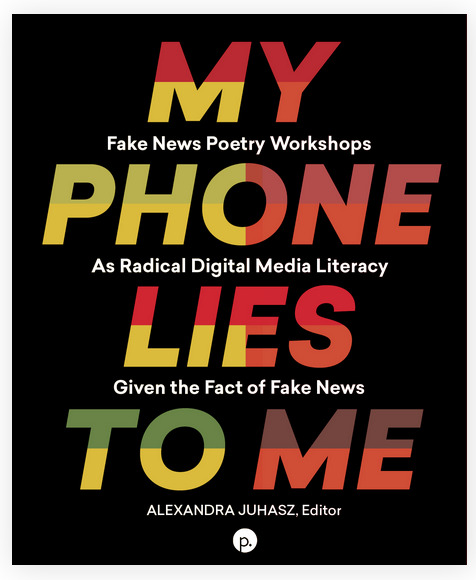
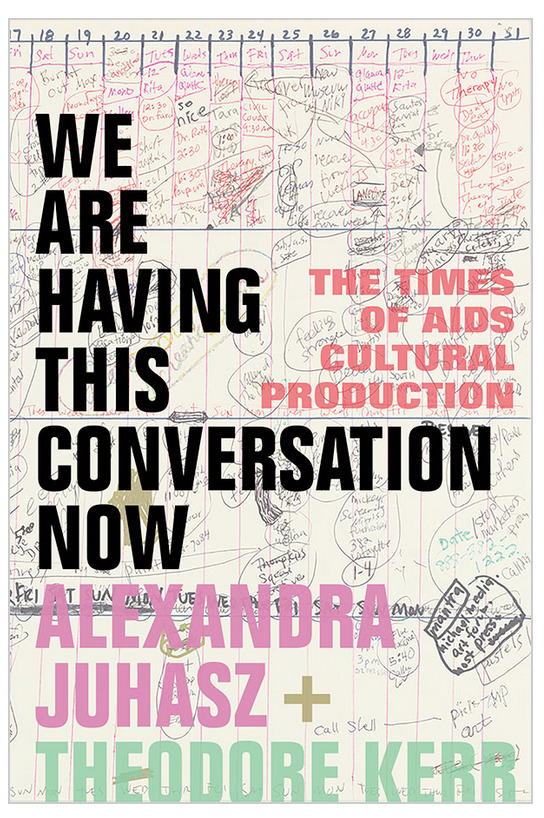
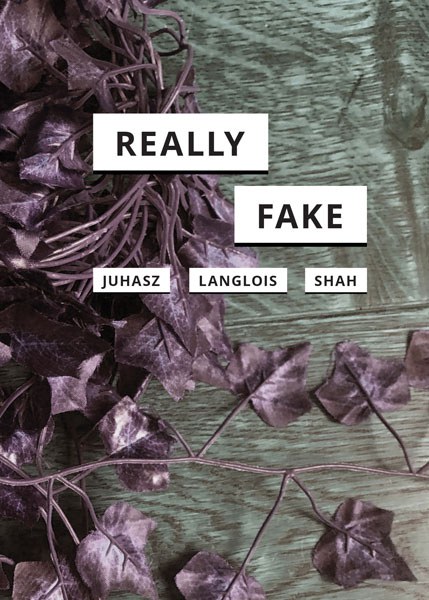
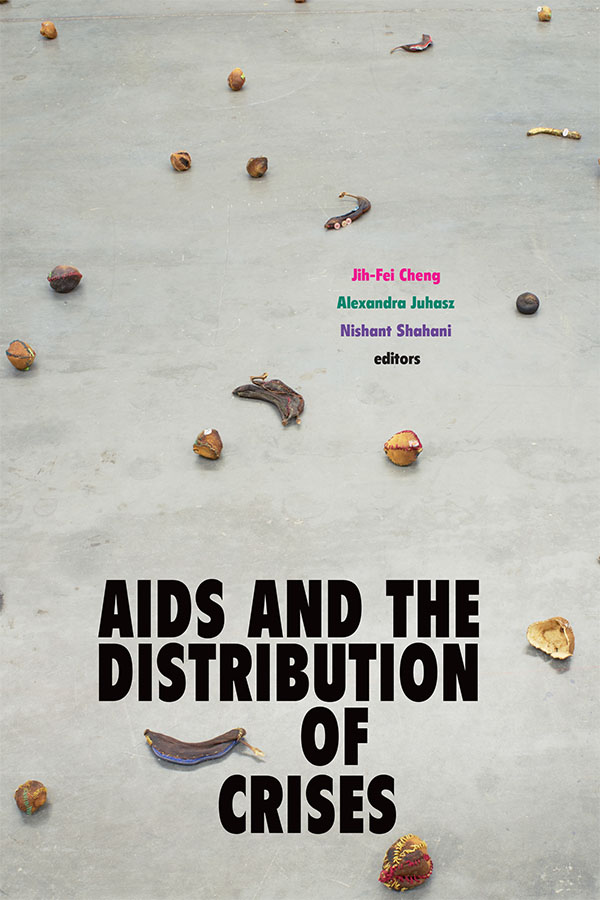
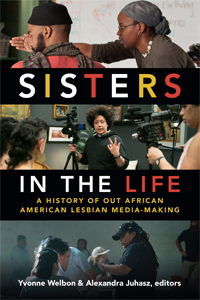
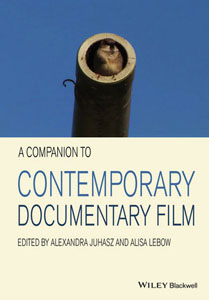
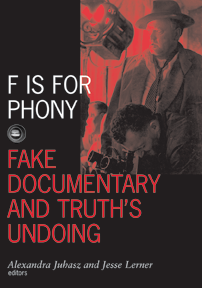
Dr. Juhasz’s first book, AIDS TV: Identity, Community and Alternative Video (Duke University Press, 1996) considers the contributions of low-end video production to political organizing and individual and community growth.
Women of Vision (University of Minnesota Press, 2001) is a companion piece to Juhasz’s 1998 documentary of the same name. The book presents the complete interviews, allowing readers to hear directly the voices of these articulate, passionate women in an interactive remembering of feminist media history. Juhasz’s introduction provides a historical, theoretical, and aesthetic context for the interviews.
An earlier large-scale digital effort is Media Praxis: A Radical Web-Site Integrating Theory, Practice and Politics.
Recent Projects :
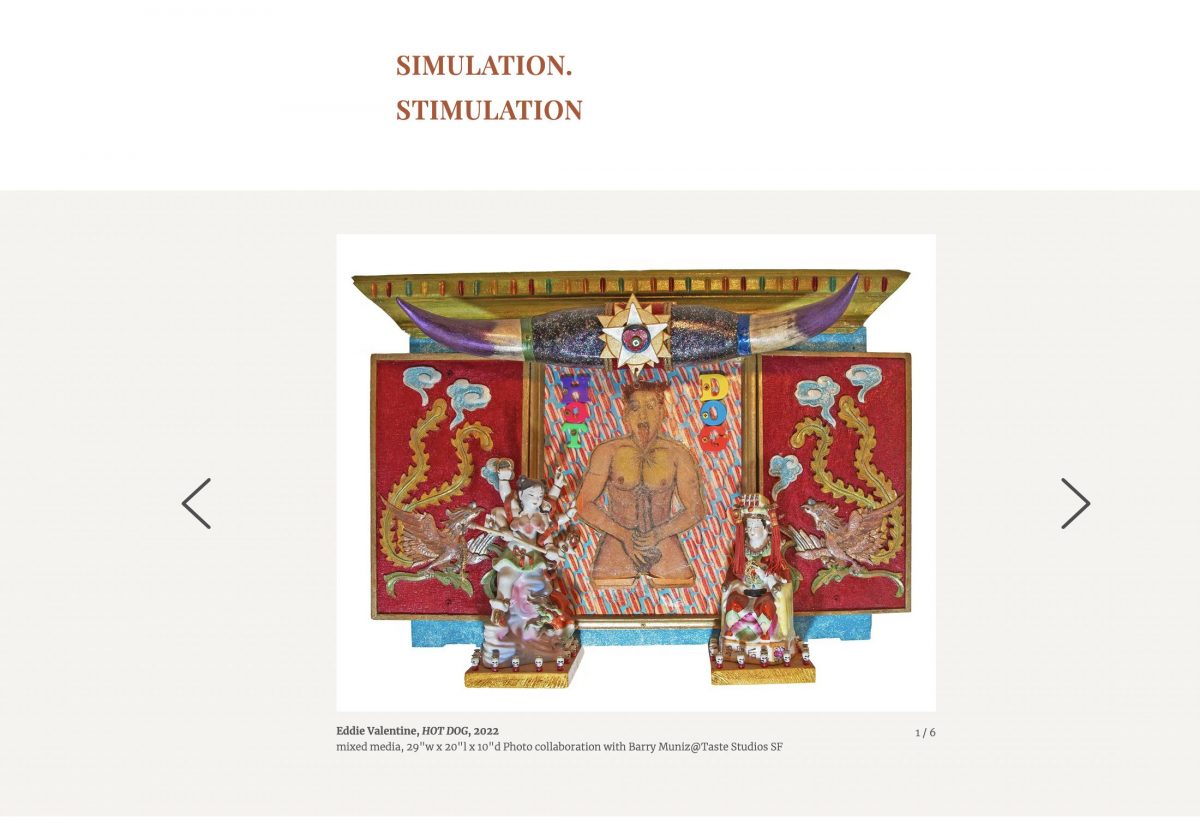
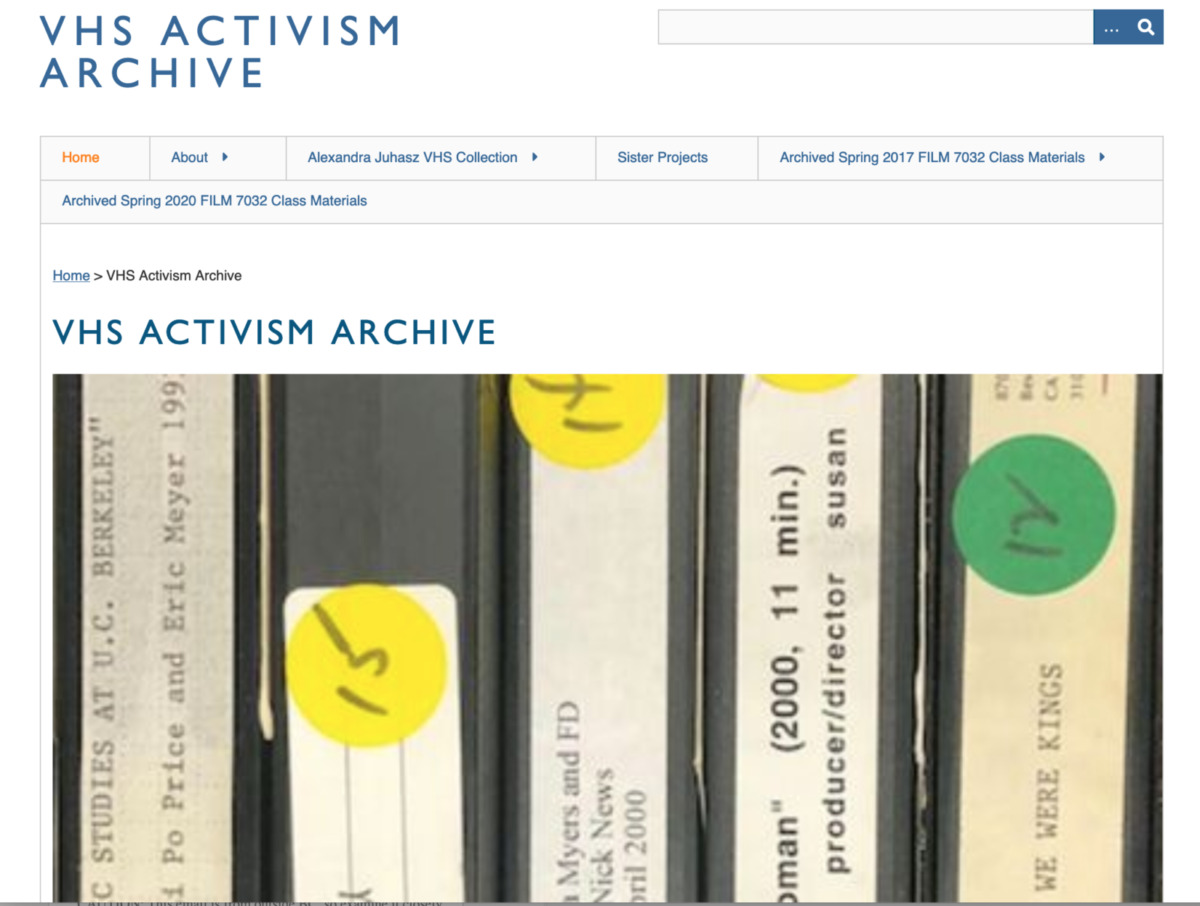
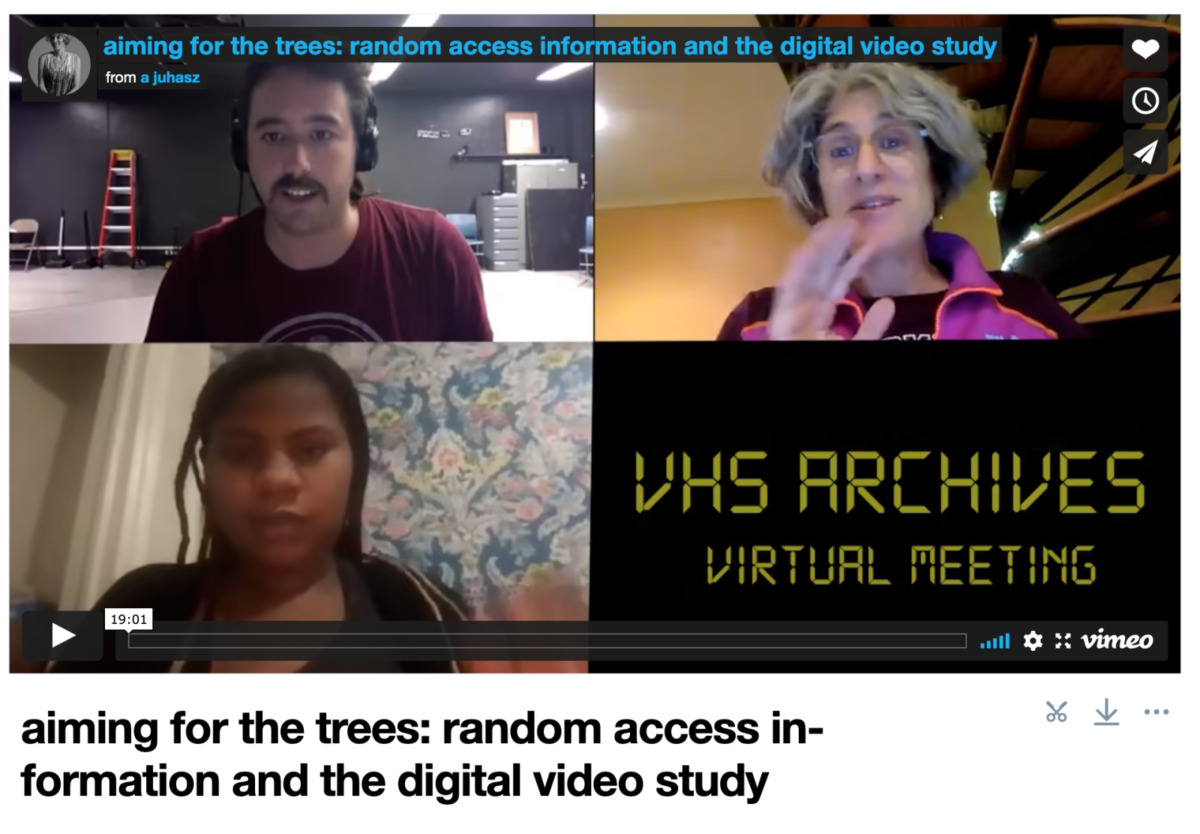
… View more Projects by Dr. Juhasz …
Featured Interviews :
What Remains: Alexandra Juhasz, Stefan Tarnowski, and Jonathan Giesen
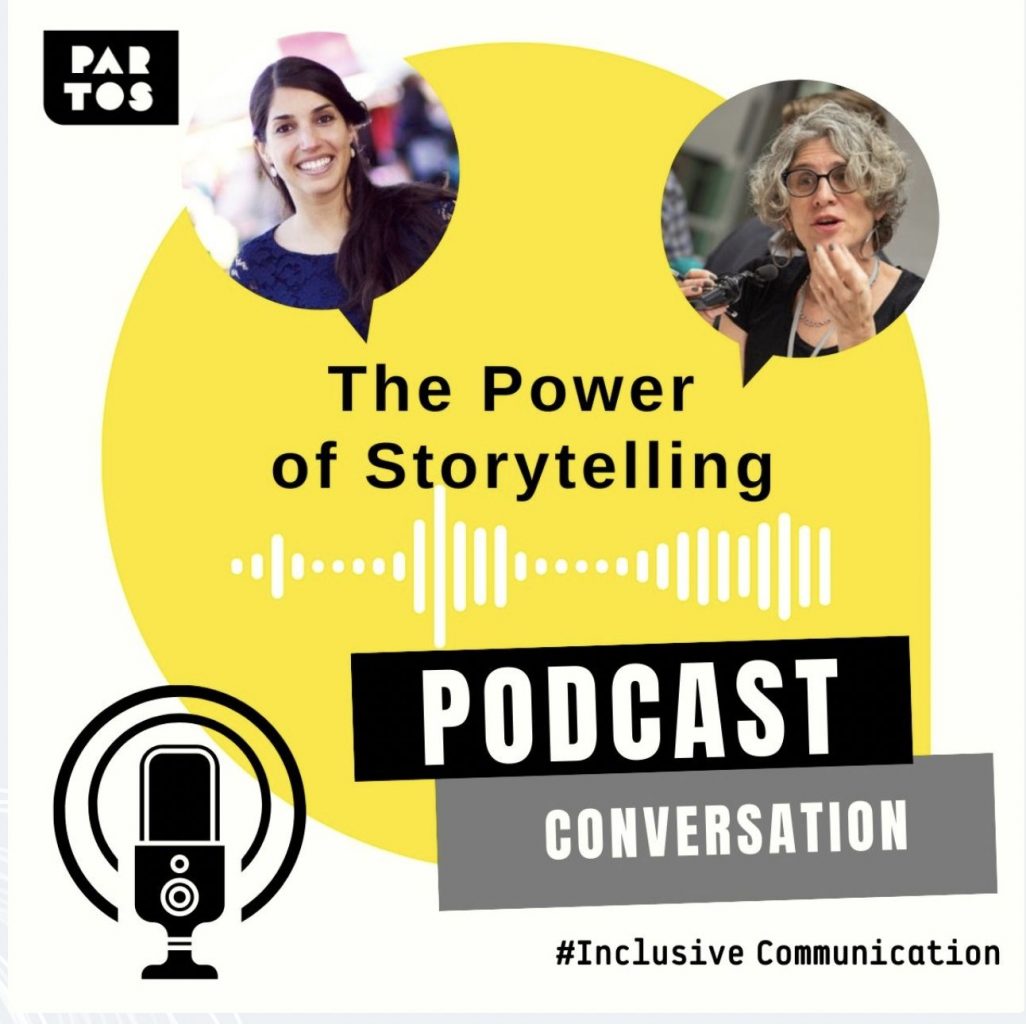
The Power of Storytelling with Asma Naimi, podcast
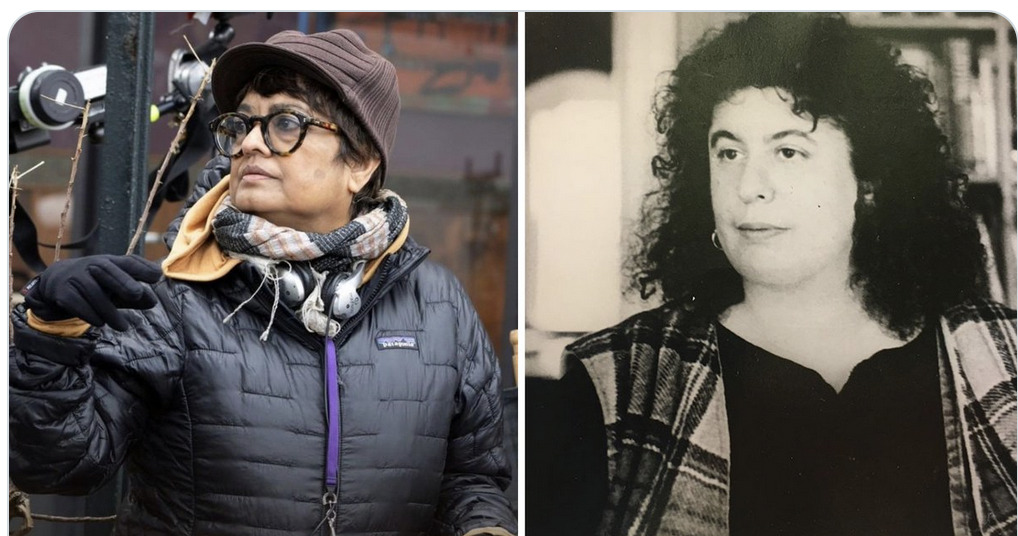
‘I’m This. I’m That. I’m Many Things’: Pratibha Parmar on Andrea Dworkin and ‘My Name Is Andrea’
Narrative Feature Films :
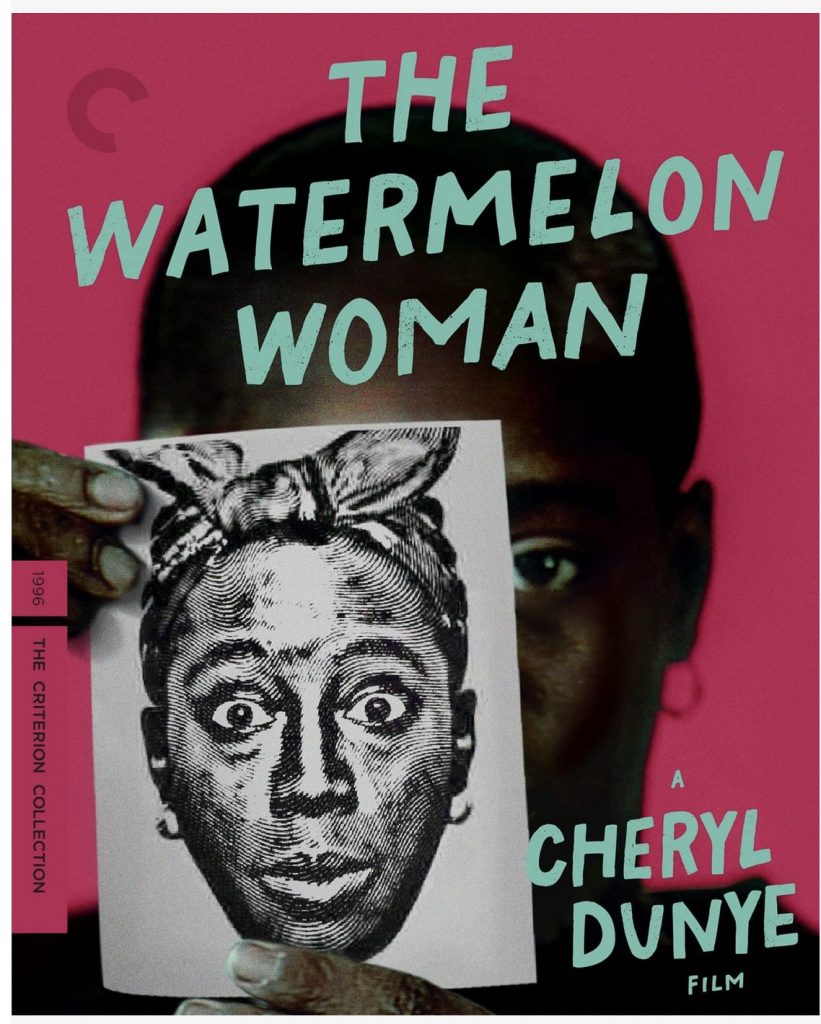
The Watermelon Woman 20th Year Re-Master and Re-Release
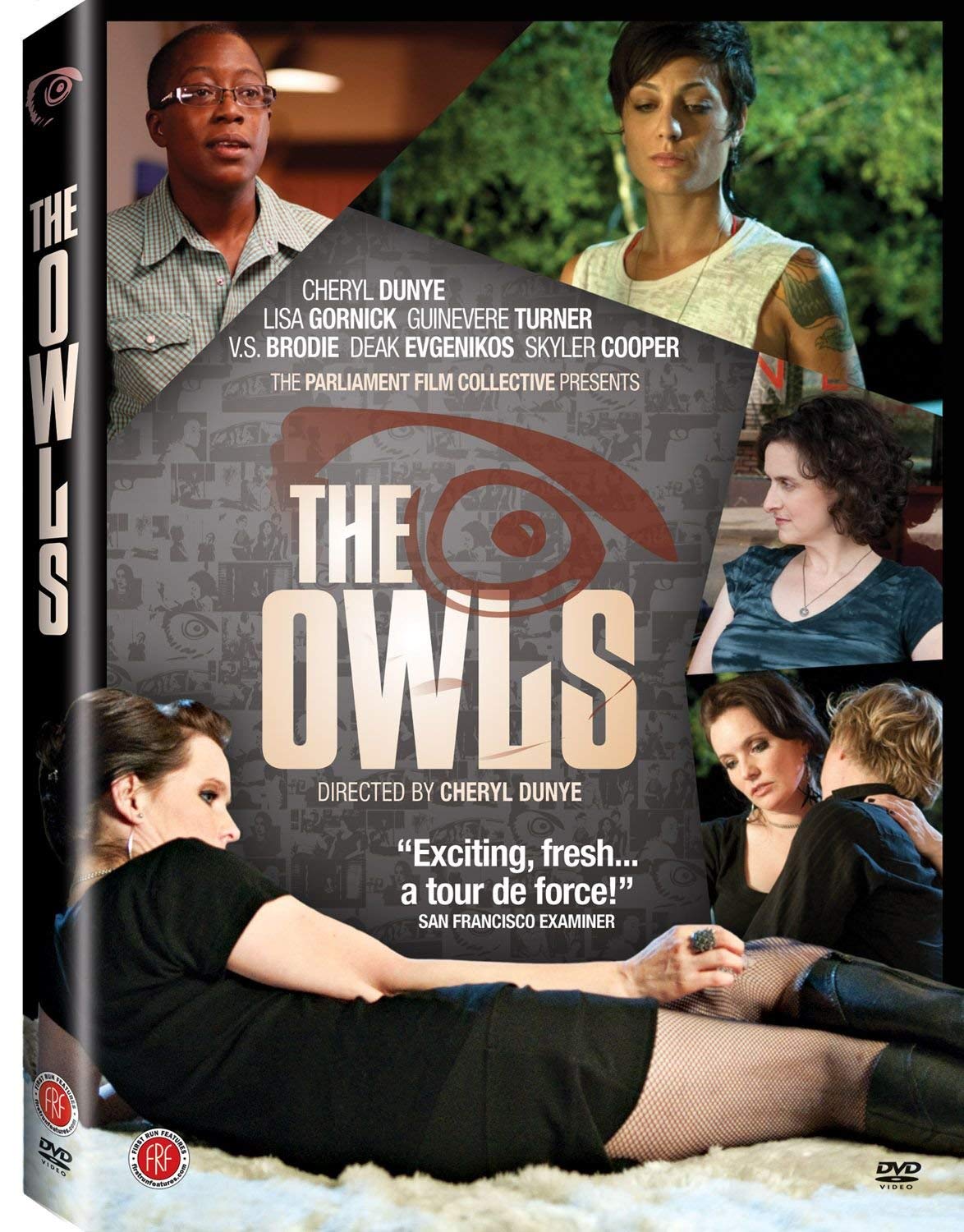
The OWLS
Dr. Juhasz produced the narrative feature films, The Owls (2010) and The Watermelon Woman (1996), as well as nearly fifteen educational documentaries on feminist issues like teenage sexuality, AIDS, and sex education.
Featured Documentaries :
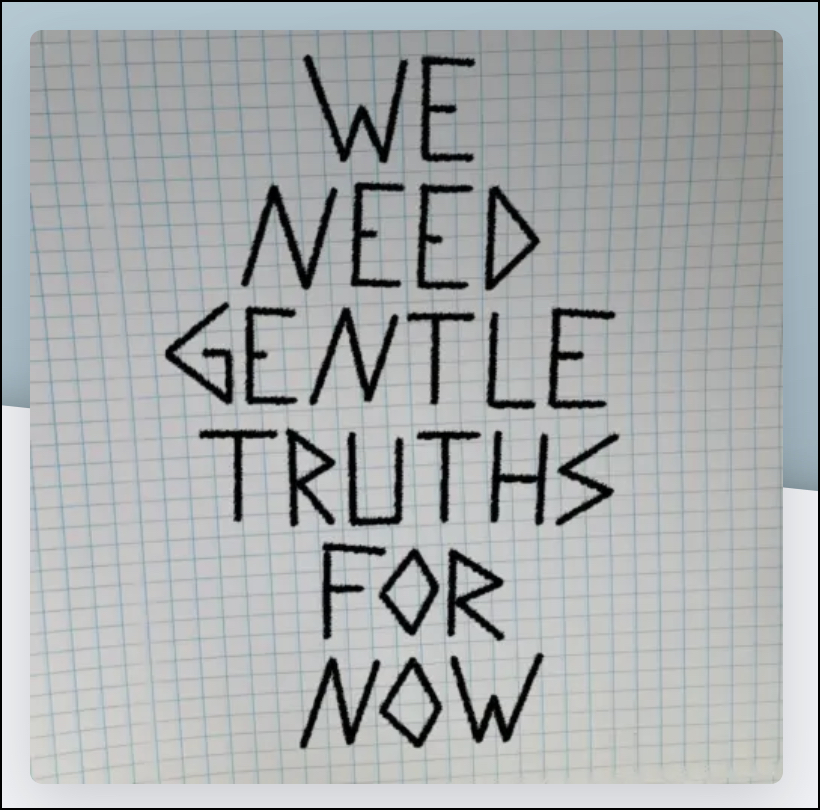
We Need Gentle Truths for Now Podcast
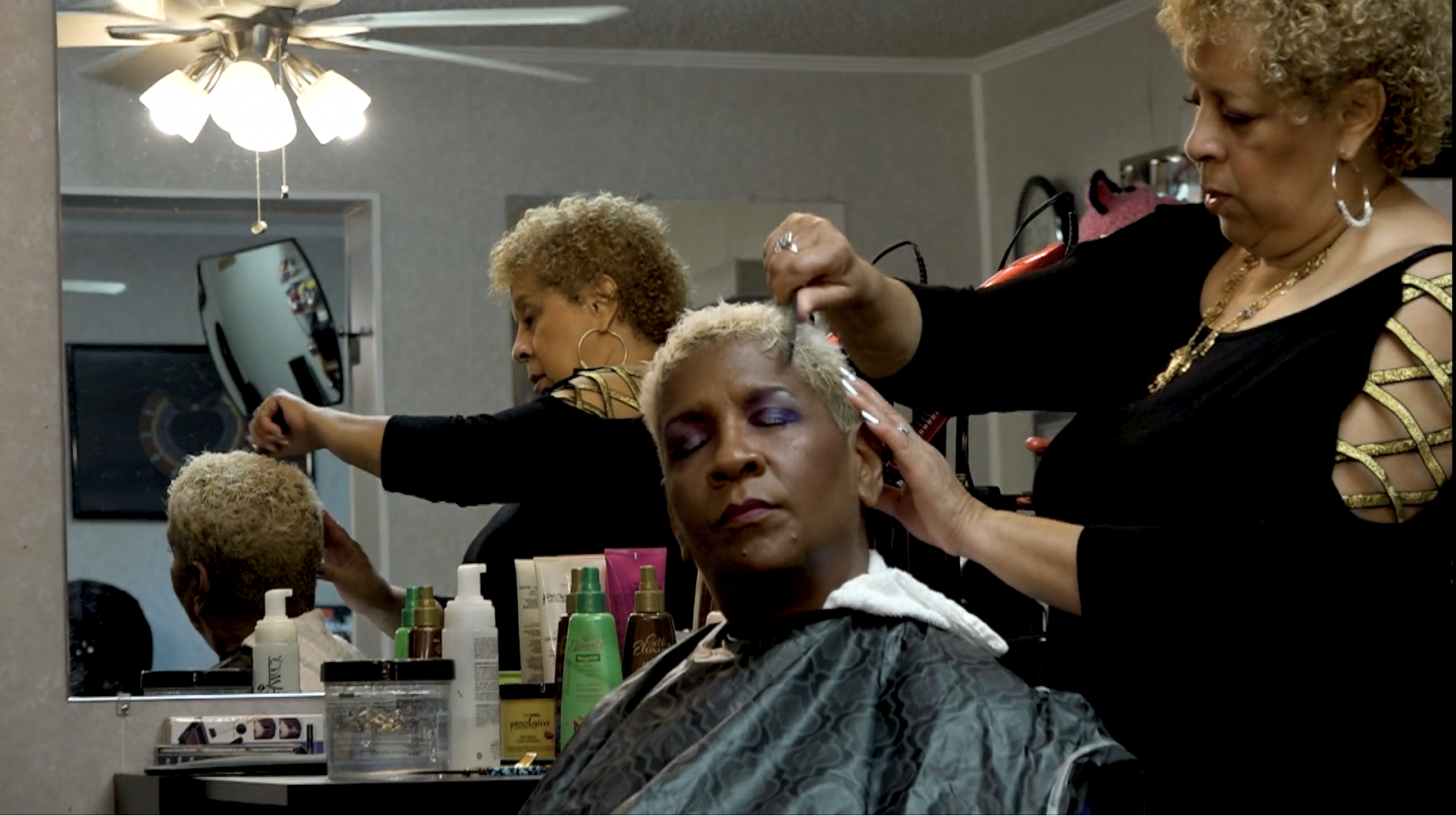
DiAna’s Hair Ego REMIX
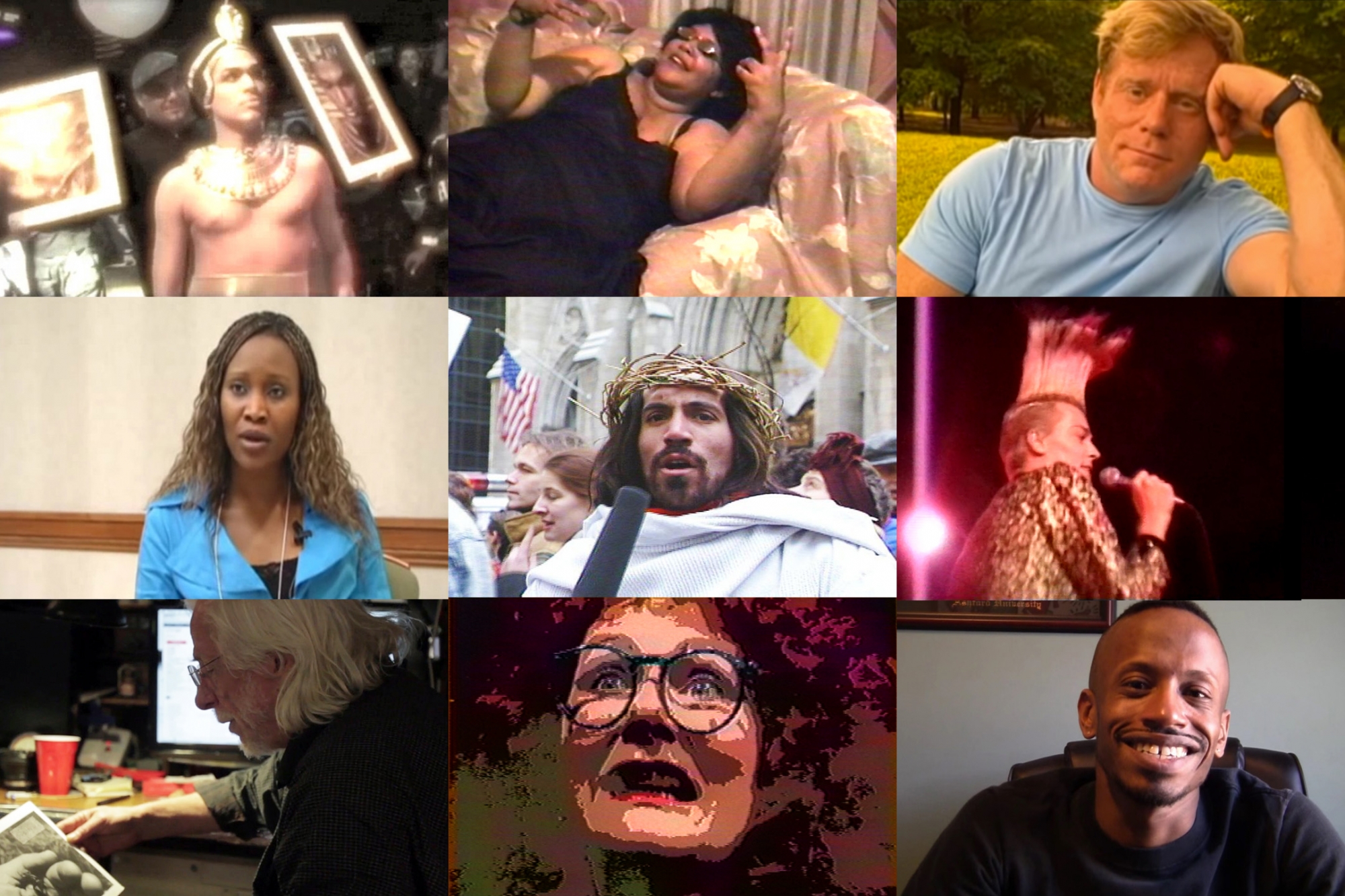
COMPULSIVE PRACTICE
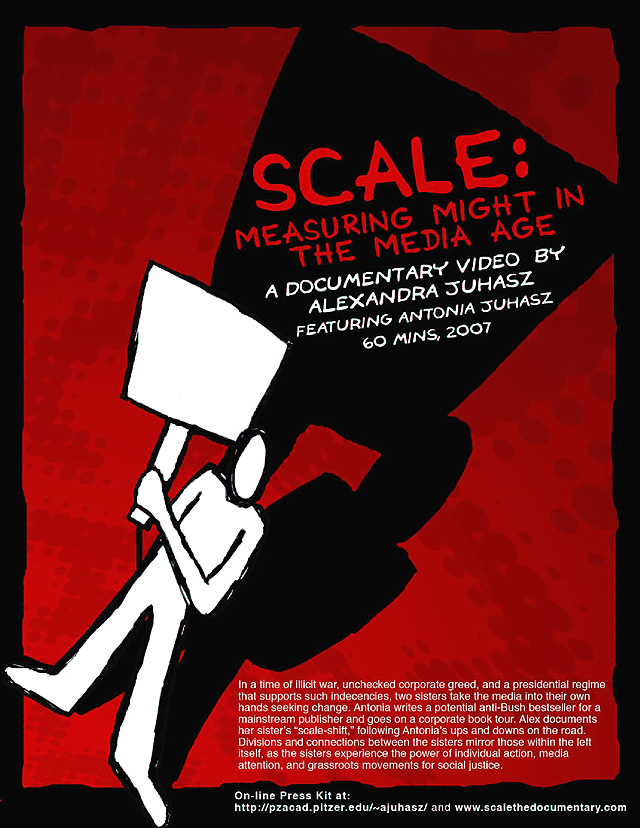
SCALE: Measuring Might in the Media Age
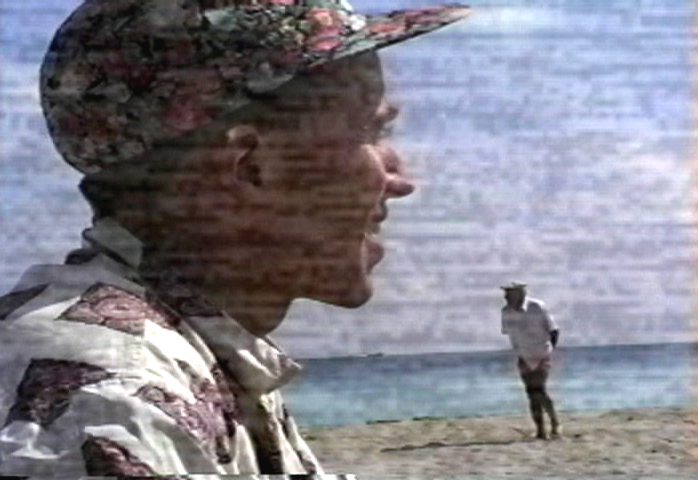
Video Remains

Dear Gabe
RELEASED: 5 Short Videos about Women and Prison
Naming Prairie
View Naming Prairie, Dear Gabe, and Women of Vision at vimeo.com.
… View other Documentaries by Dr. Juhasz …