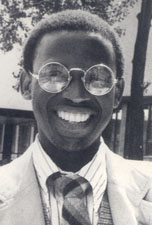
(1948 - )
At age 32 in Poland in 1980
About Myself
/Xam Intellectuals (1845-1879)
Griqua Intellectuals of 1860s (1850-1870)
The Era of Tiyo Soga (1857-1871)
Xhosa Intellectuals of the 1880s
The New African Movement
(1900-1960)
 |
||||
|
The period commencing about 1830, down to the present day, became a period of intensive monograph study of the Bantu languages, a period in which almost all the research and recording work was done by missionaries, to whom Bantu literature owes an unrepayable debt. The 20th Century was well in before Native writers began to take a hand in the development of Bantu literature, although Tiyo Soga had made his great translational contribution to Xhosa as early as 1867. If we are to create a twenty-first-century African literature, how is this to be done while publishing in African languages remains mainly confined to works prescribed for study, market-stall booklets, religious tracts? We have long accepted that Africa cannot, and so far as her people are concerned, has no desire to, create a 'pure' culture in linguistic terms; this is an anachronism when for purposes of material development the continent eagerly seeks means of technological development from all over the world . . . But we writers cannot speak of taking up the challenge of a new century for African literature unless writing in African languages becomes the major component of the continent's literature. Without this, one cannot speak of an African literature. It must be the basis of the cultural cross-currents that will both buffet and stimulate that literature. -Nadine Gordimer, "Turning the Page: African Writers and the Twenty-First Century", UNESCO Symposium, Harare, Zimbabwe, 1992 (now in Living in Hope and History: Notes From Our Century, 1999). |
||||
 |
 |
 |
 |
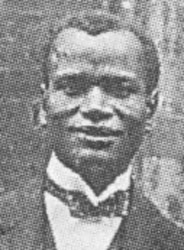 |
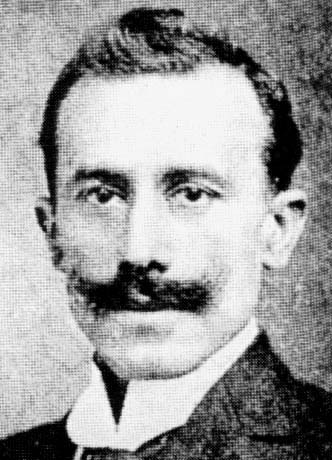
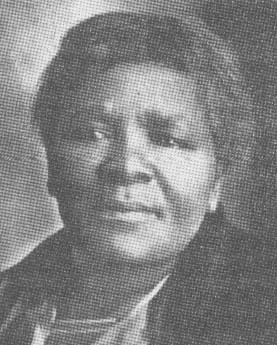
| ABDULLAH ABDURAHMIN | CHARLOTTE M.MAXEKE | MOHANDAS GANDHI | NADINE GORDIMER | R.V. SELOPE THEMA |
|
I have a vision: that those who are responsible for negotiations [on the transfer of political power between 1991 and 1993 from undemocratic white minority rule to democratic black majority rule] on the pattern of tomorrow will realise what a powerhouse of learning, knowledge, judgment, experience and wisdom the University is---and realising that, will increasingly call upon the universities and their academics to help mould the South Africa of the 3rd millenium. This is too valuable a resource to ignore: in the planning process, South Africa needs input from the universities. My vision is that this realisation should come soon and that we may play our full part at the drawing board of what promises to be among the most critical experiments in human relations ever devised by mankind. I go further: the universities of South Africa should be among the parties represented at the negotiating table. Their representatives would be men and women of relevant training and experience, not necessarily following the policy of any political party or other such grouping. -Phillip Vallentine Tobias, "Memories, Images and Visions: A Valedictory Address" (March 26, 1991). Now found in Images of Humanity: The Selected Writings of Phillip V. Tobias (Rivonia: Ashanti Publishing, 1991). |
||||
|
Explaining the reasons for the website (Language, Literature and Intellectual History in South Africa: A Conversation) about the Preliminary Periodizing of the New African Movement, a movement whose historical foundation is in New Negro Modernity and New African Modernity. Thirteen years (1997) after the beginning of the construction of the New African Movement website, in November 2010 it is possible to provide a provisional summary of its historical coordinates: A Historical Purview of the New African Movement. |
||||
The website is still under construction. Click here to send me an email if you have any input or suggestions. |
||||
The website is a historical appraisal of the making of South African modernity across the twentieth century. |
||||
The construction of the New African Movement website was begun in September 1997 and was launched on the Internet on August 11 (Wednesday) 2004 at 9:26am. |
||||